
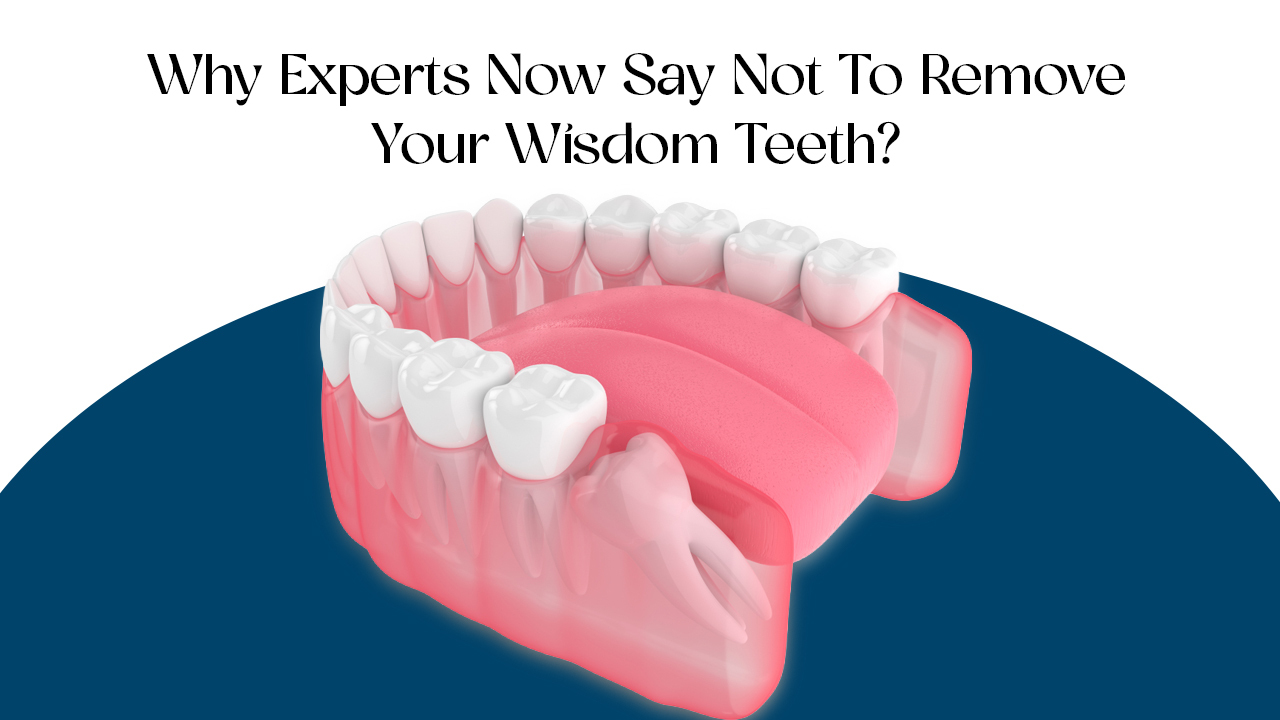
For many years, most people heard the same advice: “Get your wisdom teeth removed before they cause trouble.” Today, expert opinion has changed. Dentists suggest removing wisdom teeth only when they are problematic or show risk for the future.
Healthy wisdom teeth, in a good position that stays clean, and do not damage nearby teeth often do not need removal. That is the core idea behind why experts now say not to remove your wisdom teeth.
At Asian Dental, many young adults and parents visit us with the same doubt: “Should I remove my wisdom teeth now or wait?” As a trusted choice for families searching for the best dental clinic in Vijayawada, we do not rush into wisdom tooth removal surgery. Our team of dentists first check your teeth, gums, jaw, and X-rays, then decide whether wisdom teeth removal is truly needed.
This blog explains when you can safely keep your wisdom teeth and when wisdom tooth removal is the right decision.
What Makes Wisdom Teeth Different?
Wisdom teeth are the last molars that usually erupt between 17 and 25 years of age. Since they are the last set of teeth to arrive, they often face –
- Less space at the back of the jaw.
- A higher chance of being impacted (stuck inside bone or gum).
- More difficulty in cleaning, which lets bacteria collect.
For some people, wisdom teeth grow straight and act like normal teeth. For others, they tilt, push nearby teeth, or remain partly covered by gum. This variety is why you need proper dental advice and a full oral evaluation before deciding on wisdom tooth removal.
Why Experts Recommend Not to Remove the Wisdom Tooth?
Earlier, the thinking was: “Remove wisdom teeth as a preventive step.” Now, dentists focus on real risk, not guesswork. Modern dental research and everyday clinical practice show that many wisdom teeth can stay in the mouth safely.
To assess the removal or non-removal of wisdom tooth, dentists now look at:
- Current oral health and gum condition.
- Any pain, infection, or swelling.
- Cysts, bone loss, or damage to adjacent teeth, through x-rays.
- Age, bone density, and expected healing time if surgery is done.
If the wisdom tooth is healthy, is not the reason for gum disease, and is easy to clean, experts opt for the non-removal option, which also avoids unnecessary surgical risks and support tooth preservation.
When You Can Safely Keep Your Wisdom Teeth?
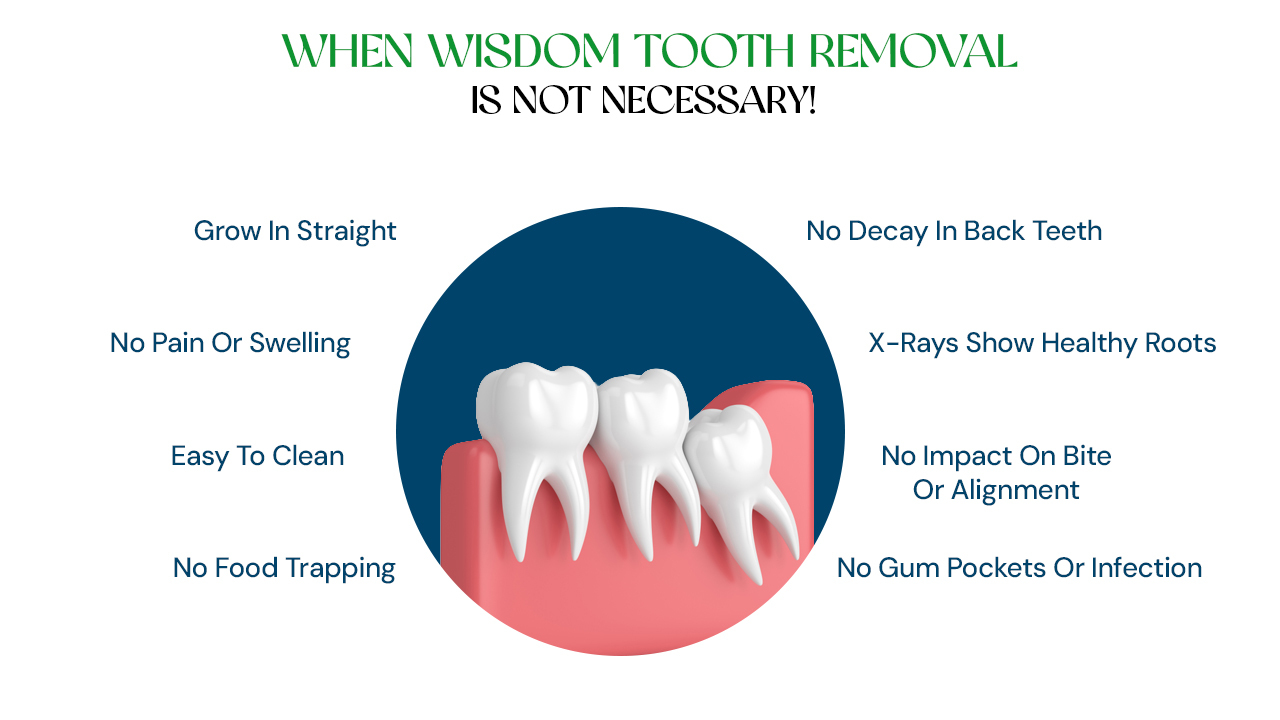
Dentists recommend the non-removal of wisdom teeth when –
- They are in a natural alignment and do not cause dental crowding.
- You can brush and floss around them without much effort.
- There are no signs of inflammation, infection, or bad breath from that area.
- X-rays show healthy roots and no nerve damage or jaw problems.
In these cases, we use a watchful waiting approach. This means:
- Regular dental check-ups.
- Periodic X-rays to track wisdom tooth growth.
- Ongoing oral hygiene coaching.
You keep the third molars, and we keep a close eye on it.
Risks Of Unnecessary Wisdom Tooth Extraction
Removing wisdom teeth is a common and safe procedure, but it is still surgery. Taking out healthy wisdom teeth “just in case” can bring problems without much benefit.
Possible issues include:
- Dry socket: when the blood clot in the socket breaks down, causing strong pain.
- Temporary or rarely long-term nerve changes, such as numbness or tingling.
- Jaw stiffness, making it hard to open the mouth fully for some days.
- Swelling, oral infection, or delayed healing.
- Unnecessary recovery time when the tooth was not causing trouble.
These risks are small but real. These are the clear reasons why experts now say not to remove your wisdom teeth.
When Wisdom Teeth Removal Is The Right Choice?
Not removing wisdom teeth is only safe when they are healthy and stable. There are several situations where wisdom teeth removal in Vijayawada is the better and safer option.
Experts suggest the removal of wisdom teeth only in the case of –
- Consistent pain at the back of the mouth.
- Swelling, gum infection, or pus around the wisdom tooth.
- Food constantly getting stuck and causing bad taste or bad breath.
- Deep tooth decay in the wisdom tooth or the molar in front of it.
- Teeth shifting, bite changes, or damage to neighbouring teeth.
- X-rays showing cysts or other changes in the jawbone.
- Wisdom teeth affecting braces or Invisalign results.
Wisdom tooth removal, in these instances, reduces future health risks, protects nearby teeth, and prevents larger surgery later.
Wisdom Tooth Evaluation at Asian Dental in Vijayawada
At Asian Dental, our team of expert dentists follow a simple rule: remove wisdom teeth only when they need to go; monitor them when they are safe to keep. This conservative and careful approach is one reason many consider us the best dental clinic in Vijayawada for wisdom tooth decisions.
Every wisdom tooth evaluation includes:
1. Oral Examination And Dental Exam
We look at your gums, tongue, and jaw, check how your teeth meet, and look for tenderness, redness, or swelling around the wisdom tooth.
2. Digital X-Rays And Oral Assessment
We use digital X-rays to see root shape, nearby nerves, sinus areas, and bone support. This helps us judge surgical complexity and future risk.
3. Risk–Benefit Discussion With You
We clearly explain:
- What happens if the tooth stays.
- What happens if we monitor it.
- What happens if we remove it.
You get professional guidance, not pressure. You can ask questions and make a decision you feel comfortable with.
4. Personalised Care Plan
If we decide on removal, we plan oral surgery with proper anesthesia or sedation, give clear instructions, and support you through healing. If we choose monitoring, we help you with dental hygiene tips and schedule periodic check-ups.
Conservative Care: Living Comfortably With Wisdom Teeth
If your wisdom teeth are healthy and we decide to keep them, a few simple habits keep them trouble-free:
- Brush carefully behind the last molars.
- Floss or use an interdental brush to clean between the back teeth.
- Rinse after sticky, sugary, or fibre-rich foods.
- Note any new oral pain, swelling, or difficulty chewing.
- Keep up with scheduled dental visits.
This conservative dental treatment approach combines daily care, patient education, and health monitoring, so you protect your wisdom teeth and your overall mouth health.
Why Asian Dental Is Trusted For Wisdom Teeth Removal In Vijayawada?
When the removal of wisdom teeth is needed, you should feel safe and well-guided. At Asian Dental, we:
- Use modern sedation dentistry and gentle techniques to manage oral pain.
- Plan surgery with detailed X-rays and full oral assessment.
- Follow strict infection control steps.
- Provide clear postoperative care and follow-up so you know exactly what to do at home.
This balance of conservative care and safe surgery is why many families choose us when they search for the best dental clinic in Vijayawada for wisdom teeth and jaw-related problems.
Book Your Wisdom Tooth Consultation in Vijayawada At Asian Dental!
If you are unsure whether your wisdom teeth should stay or go, do not guess. Opt for a consultation with expert dentists for professional evaluation. At Asian Dental, we help you understand why experts now say not to remove your wisdom teeth in many cases, and we also tell you honestly when removal is actually the safer option.
We provide detailed evaluations and safe wisdom teeth removal in Vijayawada whenever needed, with a strong focus on comfort, safety, and long-term oral health.
Book your appointment at the best dental clinic in Vijayawada now for the wisdom tooth evaluation. Call us at +91 70758 75299 (Vijayawada MG Road) or +91 94918 04333 (Vijayawada Ramavarappadu).
Frequently Asked Questions
1. Do all wisdom teeth need to be removed?
No, you don’t need to remove all your wisdom teeth. If your wisdom teeth are healthy, have enough space, and do not cause pain, your dentist will usually keep them. You only need removal when the teeth cause infection, swelling, decay, or pressure on other teeth. Regular check-ups and X-rays help your dentist monitor them safely.
2. What symptoms mean my wisdom teeth are causing a problem?
Your wisdom teeth may be causing a problem if you feel pain at the back of your mouth. Swelling, bad breath, or food getting stuck around the area are also warning signs. You should also pay attention if you find it hard to open your mouth or chew comfortably. These symptoms usually mean the wisdom tooth is infected, decayed, or impacted.
3. How often should I get my wisdom teeth checked if I don’t remove them?
If you choose to keep your wisdom teeth, you should get them checked every 6 to 12 months. These visits help your dentist check the tooth position, gum health, and bone support. Regular monitoring lets your dentist catch small problems early before they turn painful.
4. Is wisdom tooth removal painful?
Wisdom tooth removal is not painful during the procedure because your dentist numbs the area completely. You might feel some pressure, but you will not feel sharp pain. After the procedure, you may feel soreness or swelling for a few days, and your dentist will give you medicines to control it. Most people manage recovery comfortably with proper aftercare.
5. How long does recovery take after wisdom tooth removal?
Most people start feeling better within 3 to 7 days after wisdom tooth removal. Complete healing inside the gums and bone usually takes about 2 to 3 weeks. Your dentist will guide you on what to eat, how to clean your mouth, and how to avoid complications during recovery.